Art and Technology: Where Code Meets Canvas
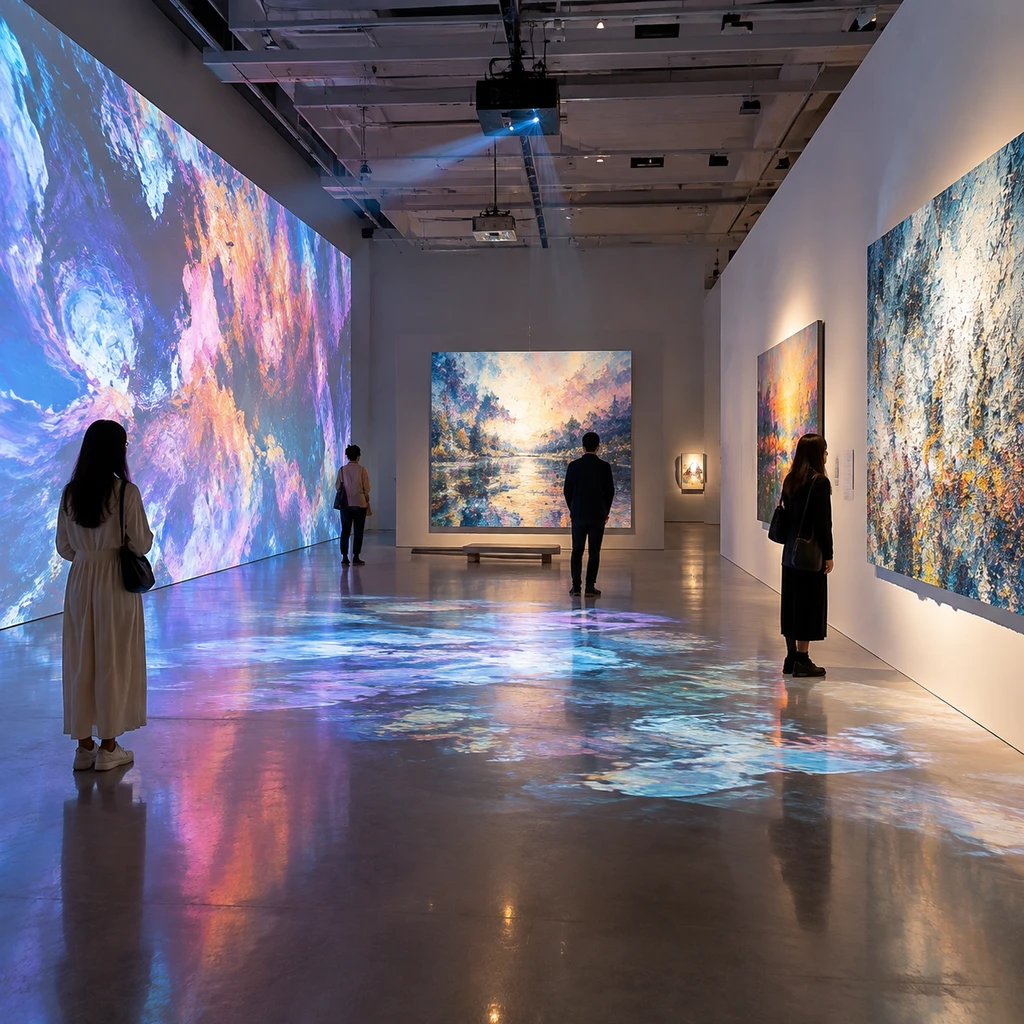
In contemporary art, technology can shape both how a work is made and how it is experienced. An artist might use an algorithm to generate a pattern, project moving images across a gallery wall, or invite visitors to alter a soundscape with their movement. The result depends less on the novelty of the equipment than on the choices behind it: what the artist wants the work to express, and what role the audience will play.
Code and canvas are often treated as opposites, but artists move between them freely. Digital tools can extend drawing, sculpture, performance, and installation, while physical materials can give digital work texture, scale, and a sense of place.
From tools to artistic medium
Technology becomes an artistic medium when an artist uses its properties to shape a work’s form, meaning, or experience. A tablet may function as a practical drawing tool; a live data feed that changes a sculpture’s light becomes part of the artwork itself.
That distinction is not always fixed. A photographer may use image-editing software to prepare a print, while another artist makes the software’s distortions and limitations central to the piece. Digital art can appear on a screen, be printed onto paper, or exist as a physical installation controlled by sensors and code. The medium includes the materials and systems that help the work take shape.
Technology also sits alongside familiar practices. Artists combine hand-painted surfaces with digital projections, pair textile techniques with responsive electronics, or use 3D modeling to plan an object later made from wood or clay. The process may cross several formats before a work reaches the gallery.
The useful question is what the technology contributes. Does it create a form that would be difficult to make otherwise? Does it change how viewers encounter the subject? Or is it simply a tool for producing an effect? Technology can broaden artistic possibilities, but its presence alone does not make a work more meaningful or innovative.
How code becomes part of the artwork
Creative coding uses code as a way to make art, while algorithms provide the instructions that guide how a work behaves or takes shape. In generative art, those instructions produce changing or variable results, often within boundaries set by the artist.
An algorithm is a set of rules for carrying out a process. An artist might write rules that place marks on a digital canvas, react to weather data, or rearrange shapes each time a piece runs. The code does not need to be complex. A few carefully chosen constraints can lead to a wide range of outcomes.
Generative art is authored through both rules and selection. The artist decides what inputs to use, what range of variation is acceptable, and when a result feels complete. Some works produce a different image at every viewing; others generate one final composition that the artist edits, prints, or translates into a physical object.
Artificial intelligence adds another set of possibilities and questions. An artist may use a machine-learning system to classify images, transform a source material, or generate visual possibilities. The artist’s choices still matter: selecting inputs, defining the process, editing outputs, and providing context all affect what the audience sees. The system’s limitations and training material can also shape the result, so AI is neither a neutral collaborator nor an automatic substitute for artistic judgment.
For viewers, the code may be invisible. Its presence becomes legible through repetition, variation, or the way a work responds over time. Looking closely at those patterns can reveal the artistic decisions beneath the surface.
Beyond the screen: immersive and interactive work
Immersive and interactive art places digital media in physical space, using light, sound, sensors, or projections to shape how visitors encounter a work. The gallery becomes part of the experience rather than a neutral backdrop.
Projection mapping aligns moving images with the contours of walls, sculptures, or architectural details. Instead of displaying a video on a flat screen, the artist can make a building appear to shift, dissolve, or open into an imagined space. The projection depends on the room’s dimensions and surfaces, so the work may feel different when installed elsewhere.
Interactive installations use inputs such as movement, touch, sound, or proximity to trigger a response. A visitor’s shadow might alter a projected field of color; a sensor might change the volume or rhythm of a soundscape. Virtual reality can place a viewer inside a digitally constructed environment, while augmented reality layers digital imagery onto a view of the physical world.
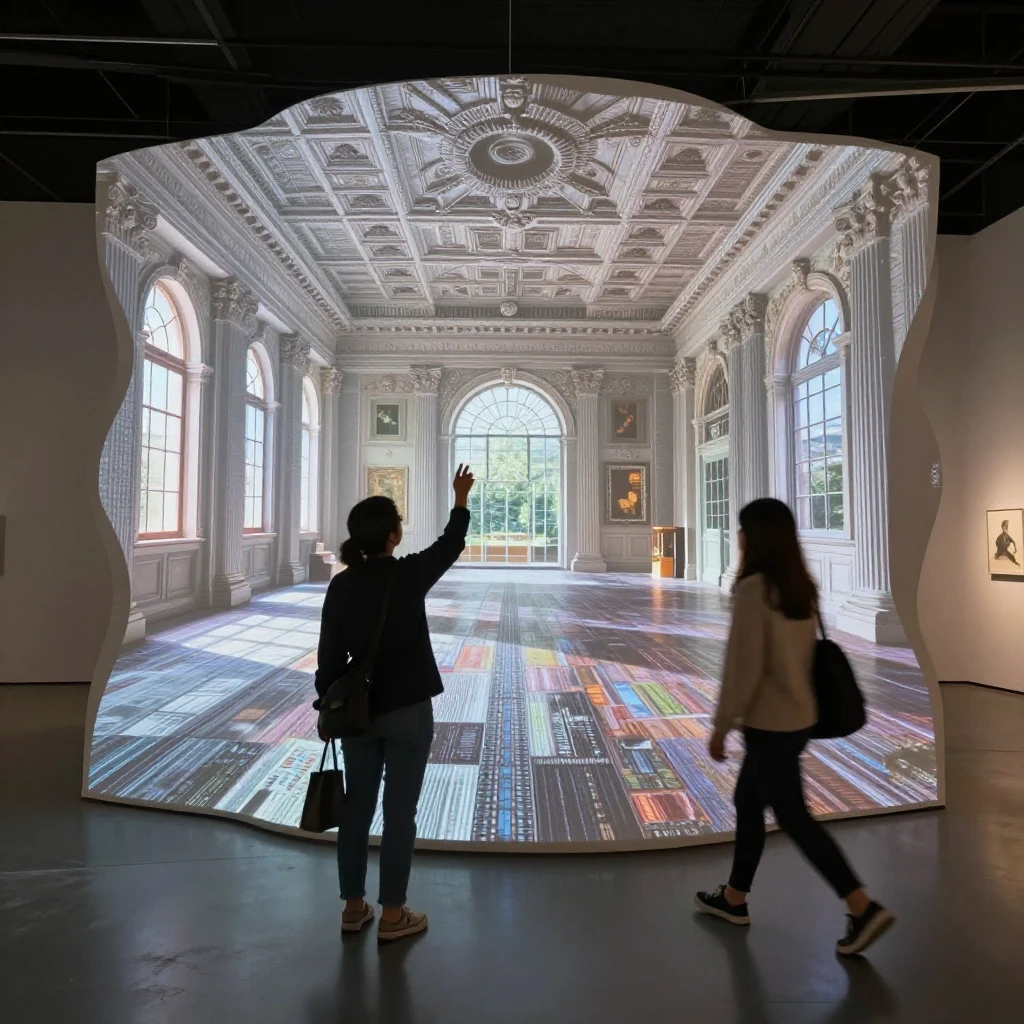
These formats can create a strong sense of presence, but they also bring practical constraints. Bright ambient light can weaken a projection, equipment may require careful maintenance, and a headset can limit how many people experience a work at once. The setting is part of the medium, and the artist must account for the conditions that make the experience possible.
The audience as participant
In participatory art, the audience can influence a work’s appearance, sound, sequence, or meaning. Interaction may change what happens, but it does not always give visitors control over the underlying system.
That distinction matters. A work might respond to a person’s movement while following a fixed set of rules. Another might collect visitors’ choices and let those choices gradually transform the installation. In both cases, the artist has designed the conditions for participation: what actions are possible, what feedback appears, and how the work handles unexpected behavior.
Audience participation can make viewing feel more like a conversation. The visitor acts, the artwork responds, and the response may encourage another action. Some works are playful or social; others use interaction to raise questions about surveillance, privacy, collective behavior, or access. A sensor that tracks movement, for instance, can make a visitor aware of being observed as well as involved.
Participation does not guarantee a deeper experience. If a work offers only a button to press, the interaction may feel superficial. If its rules are unclear, visitors may hesitate or assume they are doing something wrong. Clear cues, thoughtful pacing, and meaningful consequences help people understand how to engage without reducing the artwork to a game.
New possibilities, enduring questions
Technology expands the ways artists can make and share work, while raising questions about authorship, originality, access, and creative control. These questions depend on how a tool is used and who has the ability to shape or encounter the work.
With generative art and AI, authorship may involve a combination of the artist’s decisions, a system’s operations, and the material used to produce an output. A machine-generated image is not automatically original or artistically significant; its meaning depends on how it was made, selected, presented, and understood. Questions about training data, consent, and attribution also deserve attention when artists use systems built from existing images or other creative work.
Access is another practical concern. A large installation may depend on costly equipment, specialized technical knowledge, reliable power, or a particular kind of gallery space. Digital work can also face preservation problems: software becomes obsolete, file formats change, and interactive systems may stop working as intended. Artists and institutions may need to document a work’s behavior or maintain older hardware to keep it available.
Technology can extend a traditional practice without displacing it. A painter may use digital sketches to plan a composition, then make the final work by hand. A sculptor may use a 3D model to test scale but choose a material whose weight and irregularities change the result. The trade-off is often practical: new tools can offer speed or flexibility, while introducing technical dependencies and decisions that the artist must manage.
Experiencing technology-driven art in a contemporary art space
To experience technology-driven art thoughtfully, first notice what the work asks you to do, then observe how it responds and what choices shape that response. You do not need technical knowledge to interpret the artwork.
Start with the work’s basic conditions: where it begins and ends, what materials or screens are visible, and whether it changes over time. Then look for patterns. Does the image repeat, shift gradually, or react only when someone moves? In an interactive installation, try one action at a time and pause long enough to notice the result.
- Look before interacting. Other visitors’ actions may show whether the work responds to touch, sound, movement, or waiting.
- Notice the room. Light, distance, sound, and the presence of other people may affect what you see.
- Ask what is controlled. Consider which choices belong to the artist, which belong to the system, and which are open to the audience.
- Respect the work’s boundaries. Follow gallery instructions, especially around sensors, fragile materials, headsets, or restricted areas.
Some technology-driven works are designed for participation; others ask for quiet observation. When a piece does not respond as expected, that may reflect a technical limit, a deliberate rule, or a momentary issue. Give it time, and let curiosity guide you. In a contemporary art space, the encounter is part of the work’s meaning, but it is not a test you have to pass.
What is generative art?
Generative art is art made through a system of rules or processes that produces some or all of the work’s form. The artist defines or selects the system and may choose, edit, or present its outputs.
Does an artwork need code to be considered digital art?
No. Digital art can be made with software, captured with digital tools, displayed electronically, or shaped by code. Code is one possible part of digital art, not a requirement.
How do interactive artworks respond to visitors?
Interactive artworks use inputs such as motion, touch, sound, or proximity to trigger a designed response. Sensors and software detect those inputs, while the artist determines how the work reacts.
Can technology enhance traditional art practices?
Yes. Artists use digital tools to sketch, plan, edit, model, or animate work that may ultimately be painted, printed, woven, or sculpted. Technology can extend a practice, though the artist still decides which tools serve the work.