Site-Specific Works: How Art Transforms Its Environment
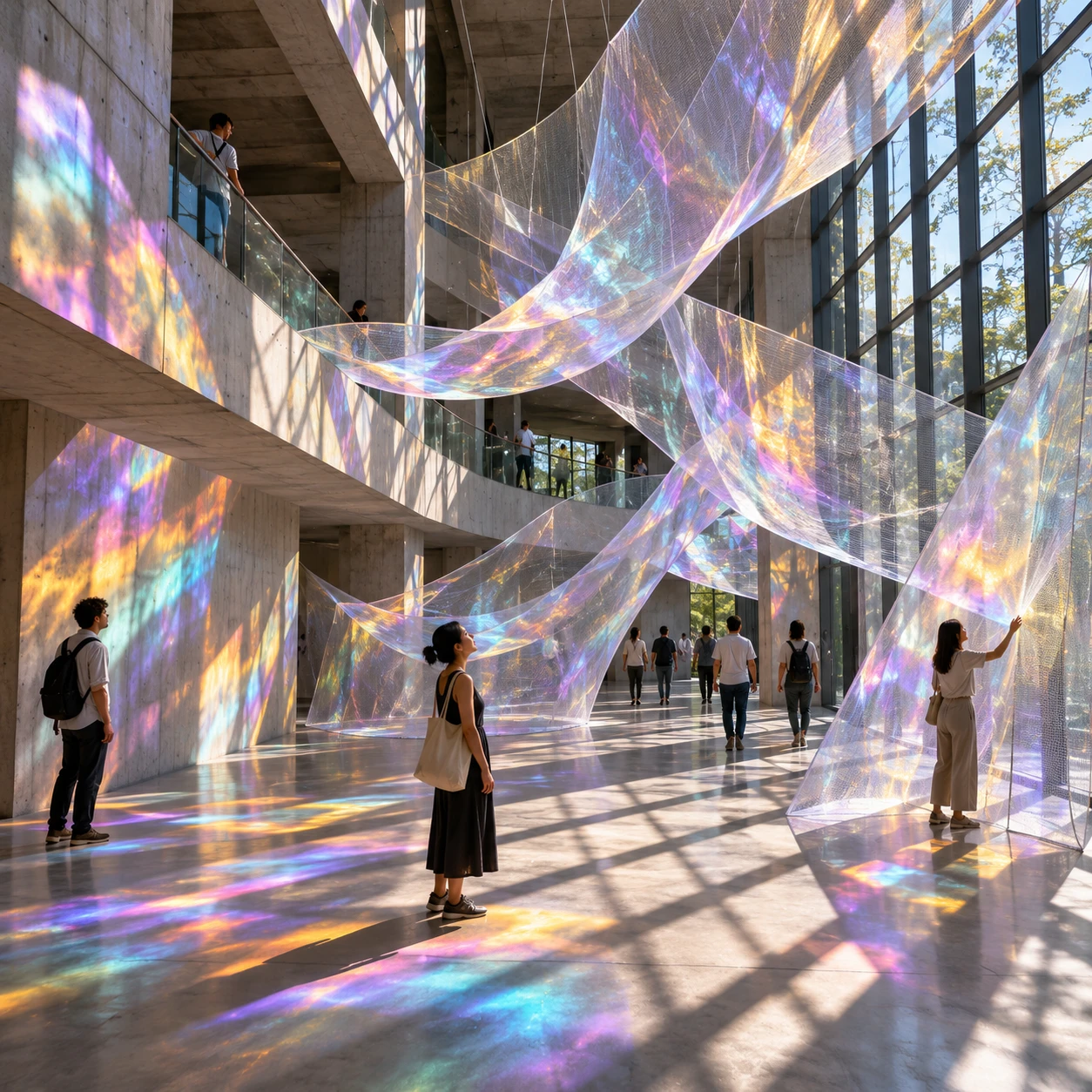
A pool of light falls across a concrete floor. Visitors slow down, look up, and notice the height of the room for the first time. In site-specific art, the setting is part of the work: architecture, landscape, local history, and everyday activity help determine what the artwork means and how people encounter it.
What Makes an Artwork Site-Specific?
Site-specific art is created in response to a particular place, so that the location helps define the work’s form or meaning. The artwork and its setting are connected; changing the setting can change the experience or interpretation.
That connection might be physical, historical, social, or sensory. An artist may work with a building’s dimensions, frame a view through a doorway, respond to a site’s past, or draw attention to sounds visitors usually ignore. The site is more than a backdrop. It is one of the materials through which the work communicates.
Site-specific art often overlaps with installation art and public art, but those terms describe different things. Installation art describes an approach to making and arranging work within a space. Public art describes where or for whom a work is presented. Either may be site-specific, but neither has to be. An installation could be recreated in several galleries with little change; a site-specific work depends more closely on its original context.
A useful test is to ask: What would be lost if this work were placed somewhere else? If the answer includes its scale, route, local references, relationship to the building, or encounter with a particular community, the place is likely integral.
Reading a Place Before Making Art
Artists read a place by studying its architecture, landscape, history, and everyday use before deciding what the work should do. This attention helps a proposal respond to real conditions rather than simply occupy available space.
Architecture offers more than walls and measurements. A low ceiling can make a suspended form feel pressing; a long corridor can turn viewing into a gradual reveal. Windows, thresholds, columns, materials, and natural light all shape where a work can sit and how it will be seen. In a historic building, an artist may choose to echo a detail, contrast with it, or leave it untouched.
Landscape brings its own changing conditions: weather, vegetation, slope, water, and seasonal light. A work outdoors must account for how people move through the site and how the environment may alter or wear its materials. Here, the setting can keep changing after installation, making the artwork’s appearance less fixed than a gallery object’s.
History and social use matter just as much. A former industrial site, a memorial, and a busy town square carry different associations. Artists may research archives, speak with residents, observe daily routines, or consult people responsible for the site. Those conversations can reveal whose stories are visible, which areas are avoided, and what practical needs a project should respect. **Research does not guarantee agreement**, but it can make the work more attentive to the people who already know the place.
How Art Changes the Experience of a Space
Site-specific art changes a space by directing attention, movement, and perception in new ways. A work may make a familiar route feel unfamiliar, draw visitors toward a neglected feature, or alter the atmosphere without changing the structure itself.
Some works guide movement. A sequence of objects might encourage visitors to cross a room rather than view it from the entrance. A sound piece could lead them toward a corner they would otherwise pass by. Other works slow people down, inviting close attention to a surface, a view, or the changing quality of light.
Scale can shift perception, too. A small intervention in a vast hall may make the building seem even larger. A form that matches a wall’s proportions can make viewers notice its construction. In a landscape, an artwork might create a new line of sight or mark a point that was previously easy to overlook. The audience becomes aware of the relationship between the work and its surroundings, rather than seeing either in isolation.
These experiences are not universal. Someone who knows a building’s history may read a work differently from a first-time visitor. A person moving quickly through a public space may encounter only a glimpse. **Audience experience depends on access, timing, and attention**, as well as on artistic intention. The work can invite a response, but it cannot dictate one.
Public, Private, and Shared Contexts
Site-specific works engage audiences differently depending on whether they appear in public, private, or shared spaces. A gallery offers a managed setting, while a street, park, workplace, or community venue brings existing routines and expectations into the encounter.
In a gallery, visitors often arrive expecting to look at art. The institution can control lighting, access, and installation conditions, though its rules may also shape who feels welcome. In public space, people may meet an artwork without planning to. They might stop, walk past, use the area as usual, or return to it over time. The work shares attention with traffic, weather, signs, and the practical purpose of the site.
Community engagement can influence how a project is developed. Artists may invite residents to contribute stories, help shape decisions, or take part in an activity. Participation, however, is not a requirement of site-specific art. Some works are made through close consultation but are not interactive; others are designed for observation. A project should explain what involvement means and avoid treating a community as a convenient source of local color.
Practical questions matter alongside artistic ones: Is the work accessible to people with different mobility needs? Will it block a route or compete with a memorial? Who maintains it, and who has authority over the site? In public art especially, clear communication with site managers and affected communities can help address these issues, though it cannot remove every disagreement.
Temporary Works and Lasting Effects
Site-specific works can be temporary or permanent, and a temporary artwork may leave a lasting effect on how people understand a place. Duration is one decision among many, shaped by materials, permission, safety, conservation, and the project’s purpose.
A temporary installation might exist for a few days, a season, or a single event. Its short life can make visitors pay attention while it is present, and it may suit a fragile or weather-sensitive idea. But temporary does not mean simple: artists and organizers still need to plan for installation, access, documentation, and removal.
Permanent works face a different set of demands. They must withstand the site’s conditions and have a plan for inspection and maintenance. Materials that look appropriate at opening may age unevenly, while changes to a building or landscape can affect the work’s original relationship to its surroundings. Choosing permanence offers continuity, but it also means accepting long-term costs and responsibilities.
Even after a temporary piece disappears, visitors may continue to notice a view, remember a gathering, or talk about the site’s history. Documentation can preserve evidence of the work, though photographs and descriptions cannot fully reproduce its scale, sound, or movement through a place. The physical artwork may end; the changed attention it prompted can remain.
What Happens When the Work Moves?
Moving a site-specific artwork can alter its meaning because the original place may be part of the work itself. Whether relocation is possible depends on the artist’s approach, the artwork’s materials, and what aspects of the site matter most.
Some works can be dismantled and reconstructed elsewhere, but a new location changes the conditions viewers encounter. A piece designed around a particular ceiling height may feel different in a lower room. A work connected to local memory may lose that reference outside its community. In such cases, a replica or reconstruction may preserve the appearance while changing the relationship that gave the original its force.
Other artists design works to travel or adapt. The concept may rely on a repeated process or a set of instructions rather than one fixed location. A new presentation can then create a different version, with the site contributing fresh meaning. The key is to be clear about whether the work is being conserved, reconstructed, adapted, or reinterpreted.
Before moving a work, consider three questions: Which parts are physically fixed? Which meanings depend on the original place? Who should be involved in the decision? These questions help institutions, artists, and communities weigh preservation against context. Relocation may protect a vulnerable work, but it can also change what the work is.