Spotlight on Emerging Artists: Profiles of 10 Must-Know Creators
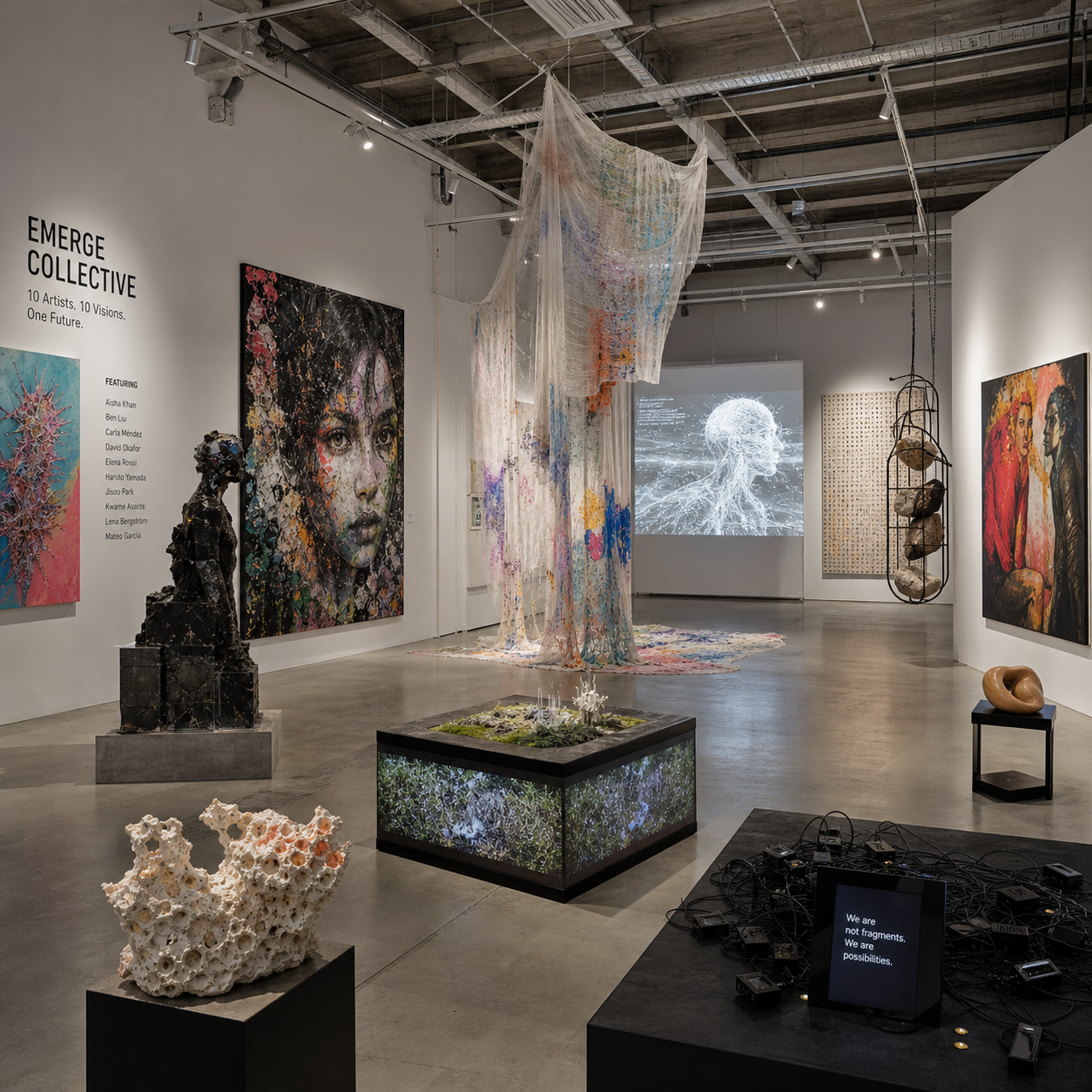
Emerging artists often reveal where contemporary art is heading before the wider art world has settled on a vocabulary for it. Their work may move between painting and performance, sculpture and ecology, or digital art and intimate storytelling. This selection focuses on creators whose artistic practice is distinctive, research-driven, and accessible to follow, rather than ranked by fame, market price, or predicted investment value.
Why Emerging Artists Matter in Contemporary Art
Emerging artists matter because they test new forms, materials, and viewpoints while established conventions are still flexible. Their work gives audiences a closer look at how contemporary art responds to technology, identity, climate, migration, and changing ideas of community.
The ten profiles below use four simple criteria: a clearly developing body of work, a recognizable artistic question, meaningful experimentation with medium, and evidence that the work rewards sustained attention. Some artists are painters; others work in sculpture, installation art, new media, or hybrid forms. None should be treated as a guaranteed investment. The more useful question is whether a practice has coherence, curiosity, and room to grow.
1. Amoako Boafo — Portraiture as Presence
Amoako Boafo uses expressive portraiture to explore Black identity, dignity, and self-possession. Born in Accra, Ghana, Boafo is known for figures painted with finger marks and vivid areas of color, giving skin and clothing a tactile, almost woven quality.
His portraits resist the passive gaze often associated with conventional representation. Sitters appear self-contained, stylish, and alert, while simplified backgrounds keep attention on gesture, posture, and presence. Boafo is worth knowing because his painting demonstrates how a familiar genre can carry social meaning without becoming didactic. The work’s strength lies in its balance between immediacy and deliberation: it is visually direct, yet its questions about visibility deepen over time.
2–5. Four More Artists Redefining Creative Practice
These four artists expand contemporary art through material experiments, speculative storytelling, and cross-disciplinary methods. Together, they show why an artist profile should consider process and context as carefully as finished appearance.
2. Zanele Muholi — Photography and Visual Activism
Zanele Muholi uses photography to affirm Black LGBTQIA+ visibility and self-representation. Working primarily in portraiture, Muholi creates images that are formally controlled but emotionally open, often turning everyday objects and domestic spaces into symbols of resilience.
The South African artist describes their role as a visual activist. That distinction matters: the photographs are not simply records of marginalized lives, but acts of authorship that challenge who gets seen and how. Muholi’s work merits attention for its combination of carefully constructed lighting, direct gaze, and community-centered intent.
3. Huma Bhabha — Sculpture After Ruin
Huma Bhabha creates sculptural figures that evoke bodies, monuments, and damaged futures. Her assemblages combine materials such as wood, clay, cork, and found objects with references to ancient sculpture, science fiction, and the visual language of war.
Bhabha’s figures often look unfinished or weathered. That roughness is central to the work, since it makes each object feel like an archaeological fragment from a future civilization. Her sculpture asks viewers to hold several readings at once: the object can suggest a person, a machine, a relic, or a warning.
4. Danielle Dean — Fiction, Labor, and the Screen
Danielle Dean combines video, installation, and research to examine labor, branding, and global production. Her projects often borrow the visual grammar of advertising, animation, and corporate media, then disrupt it with stories about workers and the systems behind consumer goods.
Dean’s practice is especially relevant to viewers surrounded by platforms and branded experiences. She makes economic structures visible without abandoning visual pleasure. The result is new media that rewards both close looking and critical reading. Her work demonstrates how installation art can turn an apparently familiar screen image into a question about power.
5. Otobong Nkanga — Materials That Remember
Otobong Nkanga links textile, sculpture, drawing, and performance to histories of land, extraction, and movement. Her installations frequently bring together minerals, fabric, rope, maps, and bodily gestures, tracing how natural resources connect distant places and human lives.
Nkanga’s materials are never neutral. A mineral can point toward labor and colonial trade; a woven surface can suggest repair, memory, or interdependence. Her work is worth following because it turns complex ecological and political questions into spatial experiences that audiences can physically navigate.
6–10. Five Artists to Watch Across Contemporary Art
These five creators show how emerging practices move between digital art, painting, performance, sound, and social research. Their differences are as important as their shared willingness to challenge fixed categories.
6. Mire Lee — Mechanical Bodies and Unstable Matter
Mire Lee builds kinetic sculptures that make machines feel bodily and vulnerable. Her installations use motors, tubing, concrete, steel, and viscous materials to create slow, unsettling movements. The objects seem to breathe, leak, strain, or reach.
Lee’s work unsettles the boundary between industrial mechanism and living organism. It is a strong example of installation art that depends on time: a photograph captures only one moment, while the experience changes as the sculpture moves. Visitors who prefer polished objects may find the work challenging, but its awkwardness is precisely the point.
7. Lawrence Lek — Digital Worlds and Artificial Intelligence
Lawrence Lek creates computer-generated films and virtual environments that explore technology, loneliness, and imagined futures. His digital art often follows artificial intelligences, fictional corporations, or melancholy characters moving through cinematic landscapes.
Lek’s worlds look immersive, yet they frequently feel empty. That tension gives the work emotional force. Rather than presenting technology as either salvation or catastrophe, he considers how machines inherit human desires, anxieties, and fantasies. His practice is useful for understanding how new media can function as both spectacle and philosophical fiction.
8. Salman Toor — Intimacy in Painted Worlds
Salman Toor uses painting to create intimate scenes of friendship, desire, and queer life across real and imagined spaces. His loose brushwork and greenish palette can make interiors feel dreamlike, while art-historical references connect private experience to larger traditions of figurative painting.
Toor’s figures often occupy bedrooms, bars, studios, and nighttime streets. These settings hold both vulnerability and possibility. His importance lies in showing that painting can be contemporary through its emotional and cultural questions, even when it works within a recognizable figurative language.
9. Tourmaline — Archives, Performance, and Liberation
Tourmaline combines film, archival research, performance, and writing to recover overlooked histories of Black trans life. Her projects transform historical fragments into vivid narratives that emphasize agency, pleasure, and survival.
Tourmaline’s artistic practice demonstrates that research can be sensuous rather than merely documentary. Costumes, movement, music, and cinematic pacing create an encounter with history that feels lived rather than distant. The work also reminds audiences that archives contain absences, and artists can respond by building forms of imaginative repair.
10. WangShui — Bodies Beyond Fixed Categories
WangShui works across painting, video, sculpture, and installation to question stable ideas of gender, embodiment, and perception. Their surfaces may shimmer, distort, or fragment, making bodies appear in states of transformation rather than fixed definition.
The practice is difficult to reduce to one medium because that refusal is part of its meaning. WangShui’s work asks viewers to reconsider how identity is produced by images, language, and social expectation. It is a compelling example of contemporary art that treats ambiguity as a generative method rather than a lack of clarity.
Shared Themes and New Directions
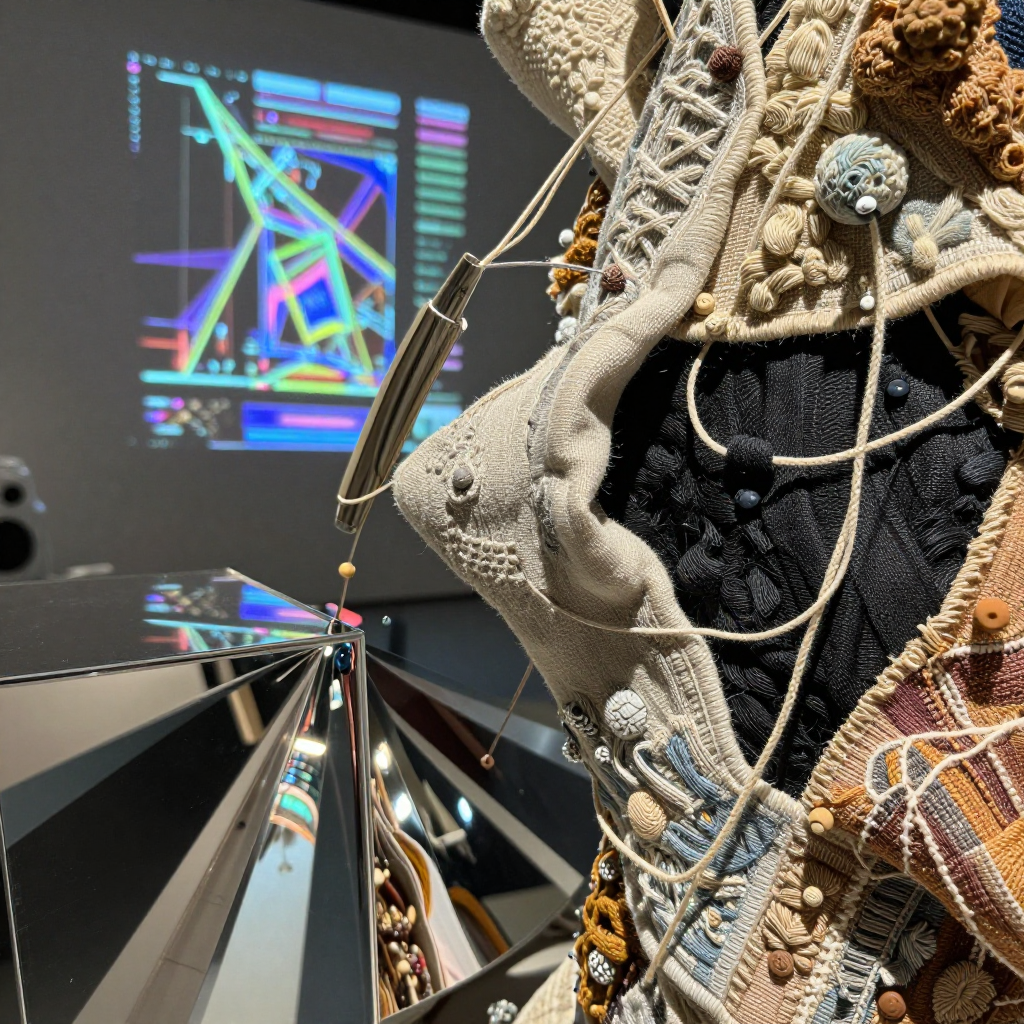
The ten artists share an interest in unstable identities, layered histories, material memory, and the effects of technology on everyday life. Their practices also reveal that contemporary art is increasingly organized around questions rather than single media.
- Hybrid methods: Painting can absorb photography, film, archives, and digital processes; sculpture can incorporate movement, sound, and performance.
- Embodied technology: Digital art increasingly explores emotion, labor, artificial intelligence, and surveillance rather than treating software as a visual trick.
- Material histories: Fabric, minerals, found objects, and industrial components carry associations with trade, extraction, care, and displacement.
- Expanded representation: Portraiture and figurative work create room for Black, queer, trans, migrant, and diasporic experiences without reducing subjects to biography.
These directions do not form a single movement. That is the useful takeaway. Emerging art is better understood as a network of overlapping concerns, with each creator choosing a different route through them.
How to Follow and Engage With Emerging Artists
To engage with emerging artists, follow the work across exhibitions, studio documentation, artist talks, and digital portfolios rather than relying on a single image. Repeated encounters reveal how a practice develops and whether its ideas hold across different projects.
- Read the artist’s own statement, then compare it with the physical work. Look for what the material does that language cannot explain.
- Visit smaller gallery programs, graduate exhibitions, project spaces, and museum group shows. These settings often present developing practices with useful context.
- Track process through a portfolio or newsletter, but treat social media as a window rather than a complete archive.
- When considering art collecting, start with the work itself, documentation, condition, provenance, and the artist’s relationship with the gallery. Buy because the piece matters to you, not because someone promises appreciation.
A practical viewing framework is material, question, consequence: identify what the work is made of, ask what problem or idea it investigates, and consider what changes in your understanding after spending time with it. This approach works for a painting, a performance, or an interactive digital artwork.
Frequently Asked Questions About Emerging Artists
What defines an emerging artist?
An emerging artist is generally a creator in the early or developing phase of a professional practice. The term has no universal age limit and does not necessarily mean inexperienced; it describes a stage of visibility, production, and recognition.
How can I discover emerging contemporary artists?
Explore independent galleries, artist-run spaces, open studios, art-school exhibitions, biennials, museum group shows, and reputable digital platforms. Curators, local arts organizations, and public arts listings can also provide valuable leads.
What should I look for when evaluating an emerging artist’s work?
Consider consistency across projects, clarity of inquiry, technical decisions, originality of perspective, and how the work changes through sustained viewing. Avoid judging solely by market attention or social-media popularity.
Where can I see or follow emerging artists?
Look for exhibition calendars, gallery websites, studio visits, artist talks, digital portfolios, and museum education programs. Direct engagement with exhibitions usually provides more insight than isolated online images.
Can emerging artists work across multiple mediums?
Yes. Many contemporary artists move between painting, sculpture, installation art, performance, film, and new media. The key question is whether each medium serves the artistic idea rather than whether the practice fits a single category.