The Role of the Project Space in Nurturing Experimental Art
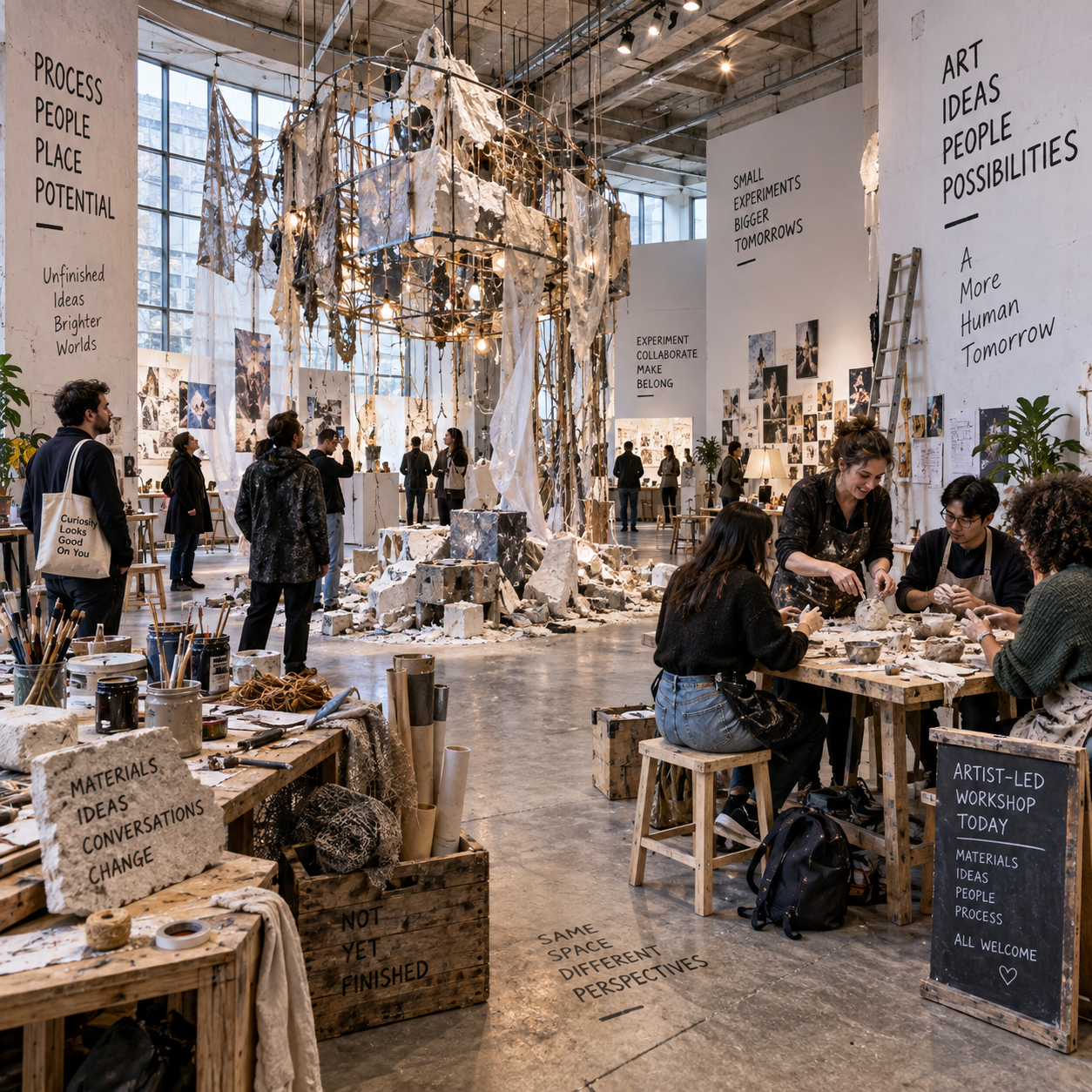
Experimental art often needs time, trust, and room to change direction. A project space provides that environment by supporting research, provisional ideas, collaboration, and encounters that may not fit the demands of a conventional exhibition system. In the contemporary art ecosystem, it can function as a studio, laboratory, meeting place, performance site, and public forum at once.
What Is a Project Space?
A project space is a flexible venue or platform where artists and curators develop, test, and present contemporary art outside the fixed structures of a traditional gallery or museum. Its programme may include exhibitions, performances, screenings, workshops, residencies, talks, and works-in-progress.
Project spaces vary widely. Some occupy a permanent storefront, warehouse, studio, or community building. Others operate temporarily in borrowed rooms, public sites, online environments, or locations selected for a particular project. The space itself may be modest; its value comes from how freely it can respond to artistic needs.
Many project spaces begin as an artist-led initiative. Artists, independent curators, or local organizers establish them to create opportunities that larger institutions cannot always provide. Decisions about programming, schedules, resources, and participation can remain close to the people making the work.
This makes a project space more than an exhibition venue. It is part of the infrastructure of contemporary art: a place where relationships form, methods are shared, and emerging practices become visible before they are fully defined.
Why Experimental Art Needs Flexible Environments
Experimental art needs flexible environments because its methods, materials, and outcomes are often uncertain. Project spaces allow artists to work through ideas without requiring every stage to look finished, commercially viable, or easily categorized.
Experimentation may involve a new material, an unfamiliar technology, a collaborative process, or a question that cannot be answered through a single object. A project space can accommodate the messiness of that process. Artists may alter an installation during its run, invite visitors to contribute, or combine sound, moving image, performance, sculpture, text, and research.
Flexible scheduling matters too. A conventional exhibition may require a fixed opening date and a completed body of work months in advance. A project space can offer shorter development cycles, repeated events, or a sequence of public tests. An artist might use one evening for a performance, several days for a workshop, and a later period to revise the work in response to audience reactions.
That freedom carries a trade-off. Less formal structure can mean fewer resources, uncertain production conditions, and limited technical support. Artists therefore need to assess what kind of flexibility is genuinely useful. A space with permission to experiment but no safe access, equipment, or communication plan may create pressure rather than possibility.
For creative experimentation to work, the project space must make room for both failure and reflection. An unsuccessful prototype can still generate valuable research when the artist, curator, and audience have time to discuss what happened.
Project Spaces Versus Traditional Art Institutions
The main difference is structural: project spaces usually operate with smaller teams, shorter decision paths, and greater tolerance for provisional work, while galleries and museums often rely on established programmes, operational systems, and public responsibilities.
| Area | Project space | Gallery or museum |
|---|---|---|
| Scale | Often small, temporary, or adaptable | Usually larger and more formally managed |
| Timeline | Can respond quickly to ideas and local conditions | Often planned months or years ahead |
| Risk | More able to present unfinished or uncertain work | May require established quality, safety, and interpretive standards |
| Relationship | Direct exchange among artists, organizers, and visitors | More defined roles and layers of administration |
| Programme | May mix exhibitions with workshops, research, and social activity | Often organized around exhibitions, collections, and education programmes |
These distinctions are tendencies, not strict rules. Museums increasingly commission participatory and interdisciplinary projects, while some project spaces adopt professional exhibition standards. The useful question is not which model is superior, but which structure suits the work.
A museum can offer conservation expertise, substantial production budgets, archives, and broad public reach. A project space may offer quicker feedback, closer collaboration, and fewer expectations about what an artwork should be. Artists often move between these environments, using each for different stages of development.
How Project Spaces Support Artistic Development
Project spaces support artistic development by combining production access, critical exchange, public testing, and opportunities for collaboration. Their strongest contribution is often the ability to support a work before it has become a polished exhibition.
Support may take several practical forms:
- Research time: Artists can investigate archives, materials, local histories, scientific questions, or social conditions before deciding on a final format.
- Residencies: A temporary period of concentrated work can provide studio access, accommodation, technical resources, or contact with a local art community.
- Workshops: Artists can learn unfamiliar processes and invite participants to contribute knowledge, craft, testimony, or physical labour.
- Works-in-progress: Public presentations make it possible to test scale, pacing, sound, movement, language, and audience response.
- Peer critique: Informal conversations with artists and curators can reveal assumptions that remain hidden in solitary studio practice.
Interdisciplinary practice particularly benefits from this structure. A filmmaker may work with a choreographer, a sound artist with a community historian, or a sculptor with an environmental researcher. The project space can adapt its rooms, equipment, and public programme as the collaboration develops.
Curatorial practice also becomes developmental rather than merely selective. Instead of choosing a finished project, a curator may help shape a question, identify collaborators, negotiate access, and create a sequence of public encounters. That requires patience and clear communication. Artists should know which aspects are open to change, who controls decisions, and what resources are actually available.
The Importance of Site, Context, and Audience
Site, context, and audience shape experimental art by influencing what can be made, who can participate, and which histories become visible. A project space gives artists an opportunity to treat location as part of the work rather than as a neutral container.
A site-responsive installation might respond to a building’s architecture, former use, acoustics, light, or surrounding neighbourhood. An artist could use a narrow corridor to control movement, transform a shop window into a public interface, or develop a sound work from local recordings. The site contributes practical limits and conceptual meaning.
Context extends beyond the building. Local residents, nearby businesses, schools, activist groups, and cultural organizations may influence the project. Meaning changes when a work is encountered by people who know the area intimately, including visitors who do not usually attend contemporary art exhibitions.
Audience participation can range from simple conversation to shared authorship. Visitors might handle materials, contribute stories, follow instructions, join a performance, or help decide how a project develops. Participation should be designed carefully. Asking people to share personal knowledge or labour without explaining how it will be used can create ethical problems.
Good audience engagement offers multiple levels of access. Someone may watch quietly, read background material, attend a workshop, or return several times as the work changes. Accessibility also includes clear information, physical access, sensory considerations, affordable or free entry, and language that does not assume specialist knowledge.
Curatorial and Community Roles
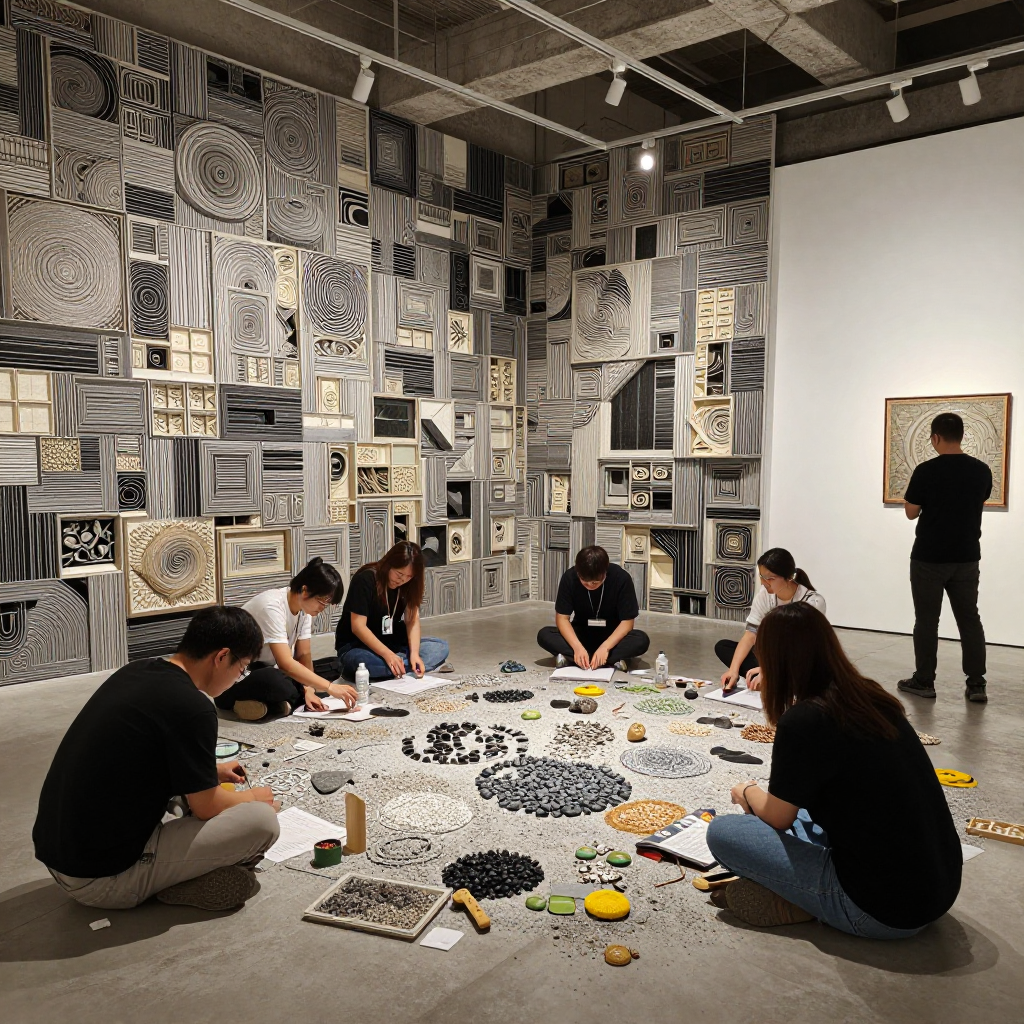
Curators, organizers, artists, and visitors collectively create the enabling environment of a project space. The curator provides direction and care, but the meaning of experimental art develops through relationships rather than through curatorial authority alone.
Curators may commission work, secure funding, arrange technical support, write interpretive material, and mediate between an artist and a community. They also establish the conditions for disagreement. An open curatorial practice does not mean having no framework; it means making the framework visible and allowing appropriate revision.
Organizers perform essential, often unseen labour. They coordinate schedules, insurance, access, equipment, permissions, safeguarding, documentation, and communication. Without this infrastructure, an apparently informal event can place unreasonable demands on artists or audiences.
The art community contributes knowledge and continuity. Regular visitors may become volunteers, collaborators, critics, or future artists. A project space can become a place where people exchange skills and discover practices that do not yet have a stable label.
Trust is central. Artists need honest information about budgets and deadlines. Communities need meaningful consultation rather than symbolic inclusion. Visitors need enough context to engage without being told what they must think. These relationships take time, and they cannot be measured only by attendance.
Challenges and the Future of Project Spaces
The main challenges for project spaces are financial instability, limited staff capacity, accessibility costs, weak documentation, and dependence on unpaid or underpaid labour. Their flexibility is valuable, but it can become fragile when the people sustaining it lack secure resources.
Funding may come from grants, memberships, partnerships, donations, artist fees, venue support, or short-term commissions. Each source has conditions. Grant funding can support ambitious production but may require lengthy applications and measurable outcomes. Volunteer labour can preserve independence but risks exhaustion and exclusion.
Project spaces can improve sustainability by adopting practical safeguards:
- Pay artists, facilitators, technicians, and community contributors wherever possible.
- Publish realistic production schedules and distinguish confirmed resources from hoped-for support.
- Budget for access, translation, transport, childcare, insurance, and maintenance rather than treating them as extras.
- Document process as well as final results through photographs, recordings, artist statements, and participant reflections.
- Build partnerships without allowing funders or hosts to determine the artistic content.
Documentation deserves particular attention. Experimental work may be temporary, participatory, or dependent on a specific site, so a photograph cannot fully represent it. A useful archive records decisions, conversations, technical conditions, and changes over time. This protects artistic knowledge and helps future researchers understand what the project made possible.
The future of the project space depends on preserving its ability to remain responsive while improving working conditions. Its value lies in creating time for questions that have not yet become products, exhibitions, or institutional programmes. When supported responsibly, it gives experimental art a place to take risks, meet its publics, and develop through sustained contact with an art community.
Frequently Asked Questions
What is the purpose of a contemporary art project space?
A contemporary art project space provides a flexible setting for developing and presenting experimental work. It may support exhibitions, research, performances, workshops, screenings, residencies, and community activity.
How does a project space support experimental artists?
It can offer time, workspace, feedback, technical resources, residencies, collaborative networks, and opportunities to present unfinished ideas in public.
What is the difference between a project space and a gallery?
A gallery often follows a more established exhibition and commercial structure, while a project space usually prioritizes experimentation, process, interdisciplinary work, and direct relationships with artists and audiences.
Why are artist-led spaces important?
Artist-led spaces allow artists to shape programming and create opportunities outside conventional institutional pathways. They can respond quickly to local needs and support practices that are difficult to categorize.
How can audiences engage with experimental art?
Audiences can attend exhibitions, performances, screenings, talks, and workshops; ask questions; contribute to participatory projects; and return during different stages of a work’s development.